For many people, investing feels intimidating — a world of charts, jargon, and constant market news that seems designed for financial experts rather than everyday savers. But investing doesn’t have to be complicated to be effective. At its core, investing is simply a way of putting your money to work over time, with the goal of growing it beyond what a regular savings account could offer.
This guide covers the fundamentals of investing for beginners: how it works, common types of investments, key concepts to understand, and practical steps for getting started responsibly.
What Is Investing?
Investing means using your money to purchase assets — such as stocks, bonds, or funds — with the expectation that they may grow in value or generate income over time. Unlike simply saving money in a bank account, investing involves some level of risk, since the value of investments can go up or down.
The potential reward for taking on this risk is the possibility of higher long-term returns than a typical savings account offers. However, it’s important to understand that investing does not guarantee profits, and it’s possible to lose money, especially in the short term.
Why Consider Investing?
Growth potential. Historically, investments like stocks have offered higher average long-term returns than traditional savings accounts, though past performance doesn’t guarantee future results.
Keeping up with inflation. Money sitting in a low-interest savings account can lose purchasing power over time due to inflation. Investing offers a potential way to grow your money faster than inflation erodes it, though this isn’t guaranteed.
Building long-term wealth. Consistent investing over many years, combined with compound growth, can help build meaningful wealth for goals like retirement, though outcomes vary based on market performance and other factors.
Key Investing Concepts to Understand
Risk and Return
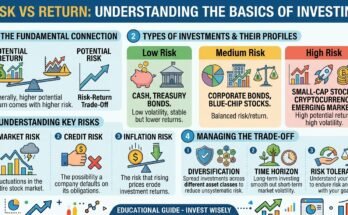
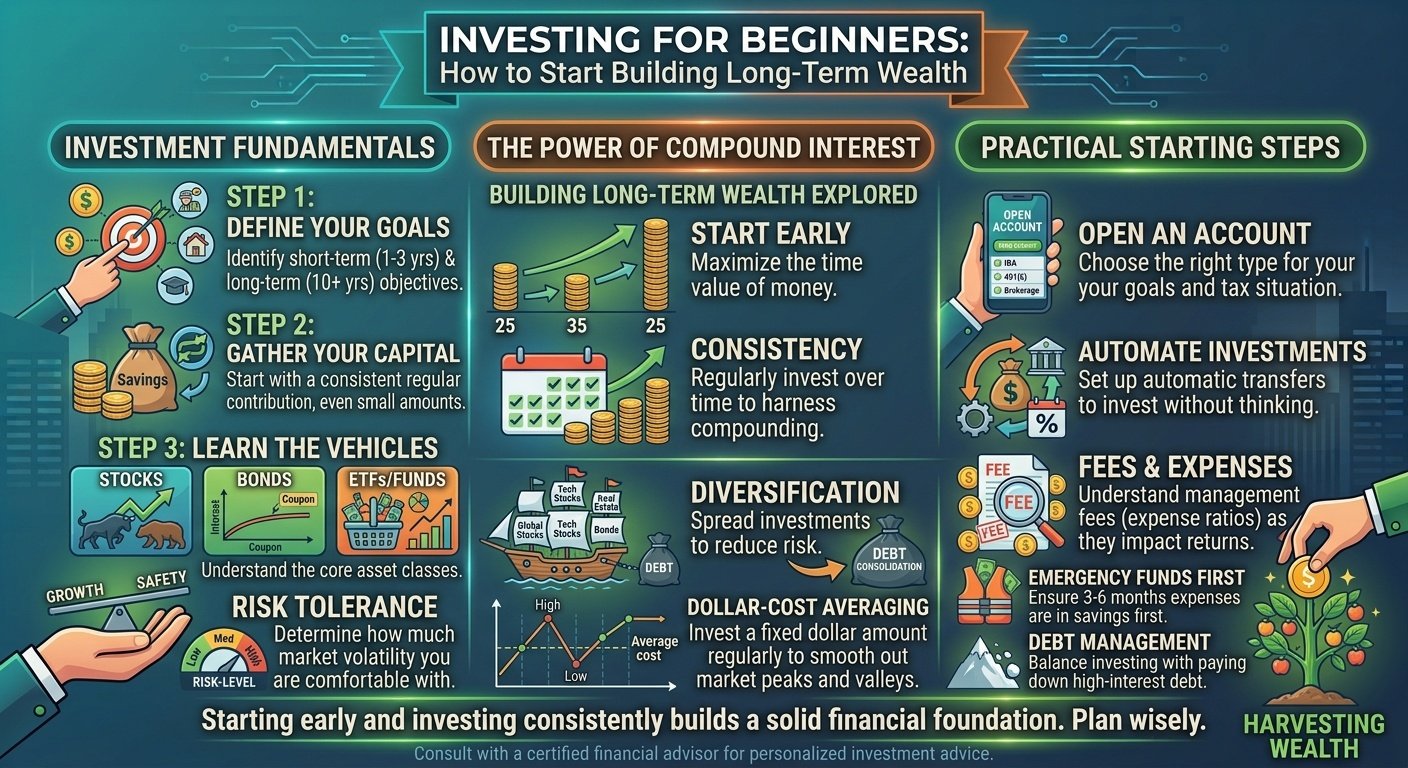
Generally, investments with higher potential returns also carry higher risk, meaning greater potential for both gains and losses. Lower-risk investments typically offer more modest, but more stable, potential returns. Understanding your own risk tolerance — how comfortable you are with potential losses — is an important part of choosing investments.
Diversification
Diversification means spreading your money across different types of investments rather than concentrating it in one place. This can help reduce the impact of any single investment performing poorly, though it doesn’t eliminate risk entirely.
Time Horizon
Your time horizon is how long you plan to keep your money invested before you’ll need it. Generally, a longer time horizon allows more room to ride out short-term market fluctuations, while a shorter time horizon may call for more conservative choices.
Compound Growth
When investment returns are reinvested, they can generate their own returns over time, a process often described as compounding. This effect tends to become more significant the longer money stays invested.
Common Types of Investments
Stocks
Stocks represent partial ownership in a company. Their value can rise or fall based on company performance, investor sentiment, and broader market conditions. Stocks are generally considered higher-risk, higher-potential-return investments compared to some other options.
Bonds
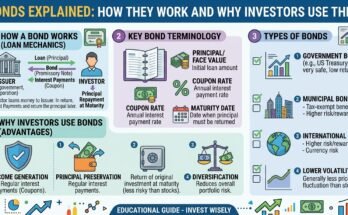
Bonds are essentially loans made to a government or company, which pay back the loan amount plus interest over time. Bonds are generally considered lower-risk than stocks, though they typically offer more modest potential returns.
Mutual Funds and Index Funds
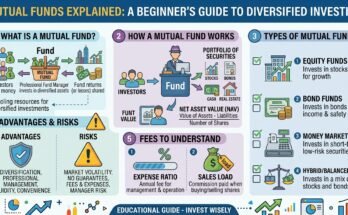
These are pooled investment vehicles that hold a mix of stocks, bonds, or other assets. They offer built-in diversification, since your money is spread across many different holdings within a single fund. Index funds specifically aim to track the performance of a market index, often at a lower cost than actively managed funds.
Exchange-Traded Funds (ETFs)
ETFs are similar to mutual funds in that they hold a diversified mix of assets, but they trade on stock exchanges like individual stocks, often with lower costs and more flexibility for buying and selling throughout the day.
Retirement Accounts
Rather than being a type of investment themselves, retirement accounts (like employer-sponsored plans or individual retirement accounts) are tax-advantaged containers that hold investments such as stocks, bonds, or funds. Since rules, contribution limits, and tax treatment vary and can change, it’s worth verifying current details from an official source.
Steps to Start Investing
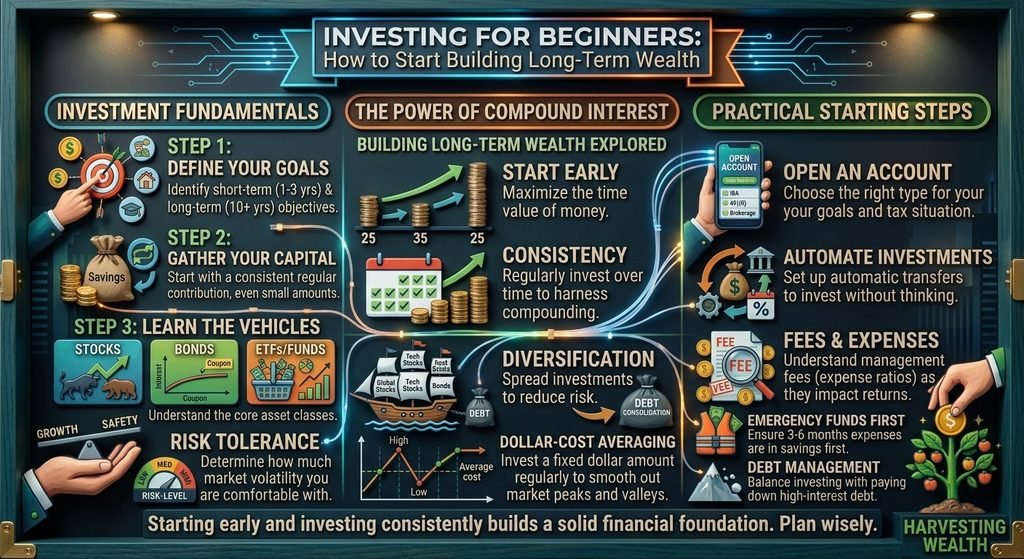
1. Get Your Financial Foundation in Place First
Before investing, it’s generally recommended to have:
- A basic emergency fund covering unexpected expenses
- A manageable level of high-interest debt (or a plan to pay it down)
- A clear budget so you know how much you can comfortably invest
2. Define Your Goals and Time Horizon
Are you investing for retirement decades away, or a goal five years from now? Your time horizon and goals help shape which investment types may be appropriate.
3. Understand Your Risk Tolerance
Consider how you’d feel — and what you’d realistically do — if your investments dropped significantly in value. Being honest about your comfort with risk helps you choose investments you’re likely to stick with during market downturns.
4. Choose an Account Type
This might include an employer-sponsored retirement plan, an individual retirement account, or a standard taxable brokerage account, depending on your goals and what’s available to you.
5. Start Simple
Many beginners start with diversified options like index funds or target-date funds, which offer broad market exposure without requiring you to pick individual stocks.
6. Invest Consistently
Regularly investing a set amount over time — sometimes called dollar-cost averaging — can help reduce the impact of trying to time the market and build the habit of consistent investing.
Common Mistakes Beginners Make
- Trying to time the market. Attempting to predict short-term market movements is extremely difficult, even for professionals, and often leads to worse outcomes than consistent, long-term investing.
- Investing money you’ll need soon. Money needed within the next couple of years is generally better kept in safer, more liquid places, since investments can lose value in the short term.
- Not diversifying. Putting most or all of your money into a single stock or investment increases risk significantly.
- Letting emotions drive decisions. Panic-selling during market downturns can turn a temporary paper loss into a permanent one.
- Ignoring fees. Investment fees can eat into returns over time, so it’s worth understanding what you’re paying, whether through fund expense ratios or account fees.
Key Takeaways
- Investing involves risk, but it also offers the potential for growth beyond what typical savings accounts provide.
- Common investment types include stocks, bonds, mutual funds, and ETFs, each with different risk and return characteristics.
- Diversification and a clear time horizon can help manage investment risk.
- It’s generally wise to build an emergency fund and manage high-interest debt before investing heavily.
- Consistent, long-term investing tends to outperform attempts to time the market.
Conclusion
Investing doesn’t require expert-level knowledge to get started responsibly. Understanding the basics — risk, diversification, time horizon, and compounding — provides a solid foundation for making informed decisions. Starting with clear goals, a manageable level of risk, and a consistent approach can help you build long-term wealth over time, even if you’re starting small.