Financial planning can sound like something reserved for people with complex investment portfolios or high incomes, but in reality, it’s a process anyone can benefit from — regardless of how much money they currently have. At its core, financial planning simply means taking a clear, organized look at your finances and creating a plan to reach your goals, whether that’s paying off debt, buying a home, or preparing for retirement.
This guide walks through the fundamentals of financial planning for beginners, breaking the process into manageable steps.
What Is Financial Planning?
Financial planning is the ongoing process of managing your money in a way that aligns with your goals and values. It typically involves assessing your current financial situation, setting clear goals, and creating a strategy to work toward those goals over time — covering areas like budgeting, saving, debt management, insurance, and investing.
Financial planning isn’t a one-time task. It’s a process that evolves as your income, goals, and life circumstances change.
Why Financial Planning Matters
Without a plan, it’s easy for money decisions to become reactive rather than intentional — paying bills as they arrive, saving whatever happens to be left over, and dealing with financial setbacks as they come, rather than preparing for them. A clear financial plan can help you:
- Understand where your money is currently going
- Make progress toward specific goals rather than vague intentions
- Prepare for unexpected expenses or emergencies
- Reduce financial stress by having a clear direction
- Make more confident decisions about big financial choices
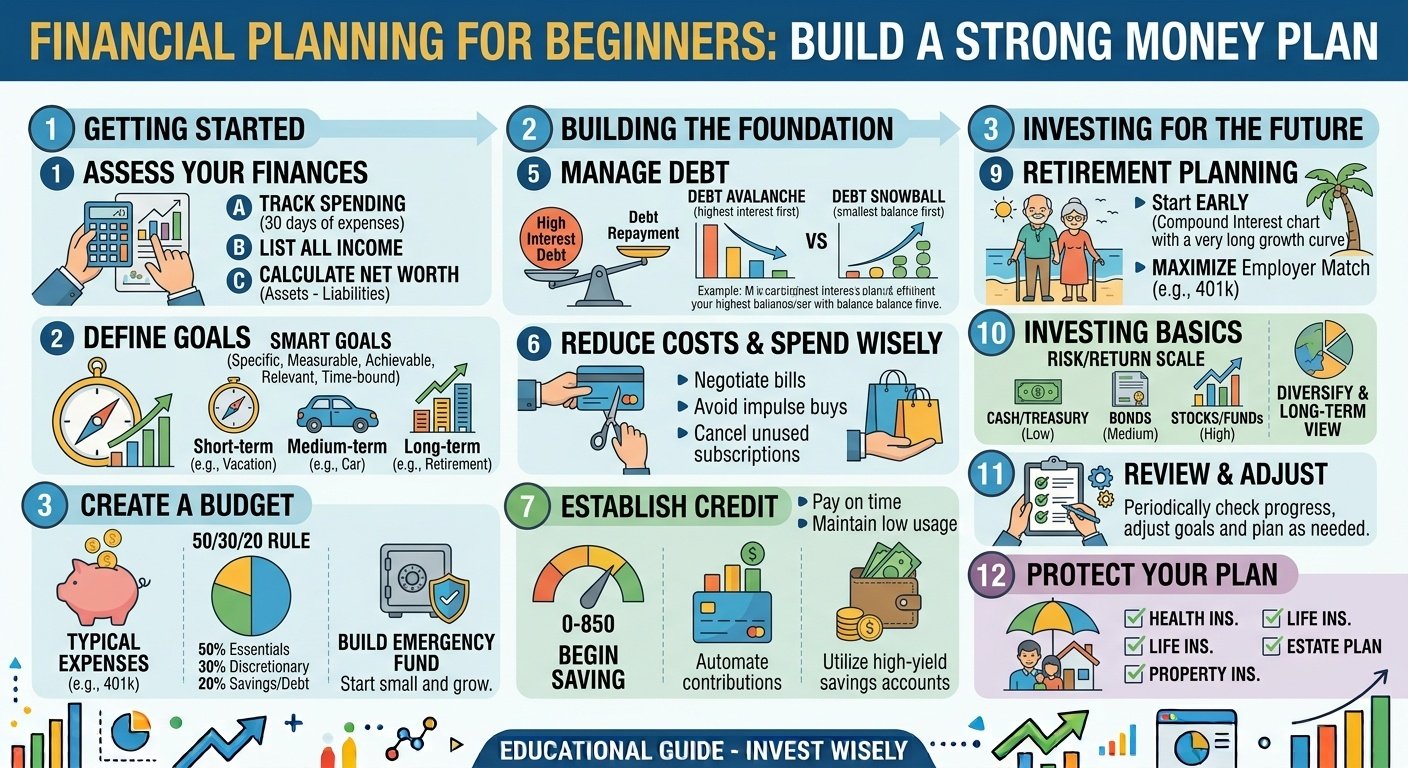
Step 1: Assess Your Current Financial Situation
Before setting goals, it helps to understand where you currently stand. This includes:
- Income. How much money do you bring in each month, after taxes?
- Expenses. Where is your money currently going? Reviewing a few months of spending can reveal patterns you might not have noticed.
- Debts. What do you owe, including balances, interest rates, and minimum payments?
- Assets. What do you own of financial value, including savings, investments, or property?
Together, these give you a realistic starting point, often summarized through your net worth (assets minus debts) and monthly cash flow (income minus expenses).
Step 2: Set Clear Financial Goals
Financial goals give your plan direction and purpose. Effective goals tend to be specific and time-bound rather than vague. For example, “save $5,000 for an emergency fund within 18 months” is more actionable than “save more money.”
Goals are often grouped by timeframe:
Short-term goals (within about a year), such as building a starter emergency fund or paying off a small debt.
Medium-term goals (roughly one to five years), such as saving for a down payment or paying off a car loan.
Long-term goals (five years or more), such as retirement savings or paying off a mortgage.
Step 3: Create a Budget
A budget connects your income and expenses to your goals, ensuring your spending aligns with what matters most to you. There are several common budgeting approaches, such as the 50/30/20 rule or zero-based budgeting, and the right method often depends on personal preference and financial complexity.
A good budget isn’t about restricting every purchase — it’s about intentionally directing your money toward your priorities while covering necessary expenses.
Step 4: Build an Emergency Fund
An emergency fund acts as a financial buffer against unexpected expenses, like medical bills, car repairs, or job loss. Without one, unexpected costs often end up on credit cards, creating new debt. Many financial educators suggest starting with a modest starter fund, then working toward a larger cushion covering several months of essential expenses, though the right amount depends on individual circumstances like job stability and dependents.
Step 5: Manage and Reduce Debt
If you’re carrying debt, particularly high-interest debt like credit cards, addressing it is often an important part of a financial plan. This might involve choosing a payoff strategy, such as the debt avalanche or debt snowball method, and factoring debt payments into your budget as a clear priority.
Step 6: Protect Yourself With Insurance
Insurance isn’t always the most exciting part of financial planning, but it plays an important protective role. Depending on your situation, this might include health insurance, auto insurance, renters or homeowners insurance, and life insurance, particularly if others depend on your income. The right types and amounts of coverage vary significantly based on individual circumstances.
Step 7: Start or Continue Investing
Once you have a foundation in place — a budget, an emergency fund, and a plan to manage debt — investing becomes a tool for building longer-term wealth, particularly for goals like retirement. This might involve contributing to an employer-sponsored retirement plan, an individual retirement account, or a taxable brokerage account, depending on your goals and what’s available to you.
Step 8: Review and Adjust Regularly
Financial planning isn’t something you do once and forget. Life changes — a new job, a move, a growing family, or a shift in goals — often call for adjustments to your plan. Reviewing your budget, goals, and progress periodically, such as annually or after major life events, helps keep your plan aligned with your current situation.
Common Mistakes in Financial Planning
- Not having clear, specific goals, which makes it harder to know if you’re actually making progress
- Focusing only on one area, such as investing, while neglecting others like emergency savings or debt management
- Comparing your plan to others, rather than focusing on what fits your own income, goals, and circumstances
- Never reviewing or adjusting the plan, even after major life or financial changes
- Trying to tackle everything at once, rather than prioritizing steps in a manageable order
A Simple Financial Planning Checklist
- Understand your current income, expenses, debts, and assets
- Set specific short-term, medium-term, and long-term goals
- Create a budget that aligns spending with your goals
- Build an emergency fund
- Create a plan to manage or pay down debt
- Review your insurance coverage
- Begin or continue investing toward long-term goals
- Review and adjust your plan regularly
Key Takeaways
- Financial planning is an ongoing process of managing your money in line with your goals, not a one-time task.
- A solid plan typically starts with understanding your current financial situation and setting specific, time-bound goals.
- Budgeting, emergency savings, debt management, insurance, and investing are all common components of a well-rounded financial plan.
- Reviewing and adjusting your plan periodically helps it stay relevant as your life and goals change.
- There’s no single “correct” financial plan — the right approach depends on your individual circumstances and priorities.
Conclusion
Financial planning doesn’t require complex tools or a large income — it requires a clear understanding of your current situation, specific goals, and a realistic plan to work toward them. By addressing budgeting, saving, debt, insurance, and investing as connected parts of a broader plan, you can build a stronger financial foundation and make more confident decisions, both today and in the years ahead.