Retirement can feel like a distant concern, especially early in your career, but the earlier you start planning, the more options and flexibility you’re likely to have later on. Retirement planning isn’t just about saving money — it’s about understanding your future needs, using the right tools and accounts, and consistently working toward a goal that may be decades away.
This guide covers the basics of retirement planning: why it matters, how much you might need, common account types, and practical steps to get started or stay on track.
Why Retirement Planning Matters
Unlike many financial goals, retirement typically requires decades of saving and relies heavily on the power of compound growth over time. Starting early, even with modest contributions, can make a significant difference compared to starting later with larger contributions, simply because invested money has more time to grow.
Additionally, retirement planning matters because:
- Traditional pensions have become less common in many places, shifting more responsibility onto individuals
- Government retirement benefits, where available, often aren’t designed to fully replace pre-retirement income on their own
- Healthcare and living costs in retirement can be significant and are worth planning for in advance
- People are generally living longer, meaning retirement savings may need to last longer than in previous generations
How Much Do You Need to Retire?
There’s no single, universal answer to this question, since it depends on factors like your desired lifestyle, expected expenses, other income sources, and how long you expect to be retired. That said, a few common approaches can help guide your thinking:
Income replacement approach. Some financial educators suggest aiming to replace a percentage of your pre-retirement income, though the right percentage varies based on individual circumstances and expected retirement expenses.
Expense-based approach. This involves estimating your expected expenses in retirement, including housing, healthcare, and lifestyle costs, and working backward to determine how much savings and income you’d need to support them.
Withdrawal rate approach. Some investors use a general guideline for how much can be withdrawn from retirement savings annually without depleting the funds too quickly, though this depends on investment returns, inflation, and how long retirement lasts, and shouldn’t be treated as a guaranteed formula.
Because personal circumstances vary so widely, and because these guidelines can be debated or updated over time, it’s often worth consulting current, reliable resources or a qualified financial professional when estimating your specific retirement number.
Common Retirement Account Types
Retirement accounts often come with tax advantages designed to encourage long-term saving. The specific account types, contribution limits, and tax rules vary by country and can change over time, so it’s important to verify current details from an official source relevant to your location. That said, some general categories include:
Employer-Sponsored Retirement Plans
Many employers offer retirement savings plans, sometimes with matching contributions up to a certain percentage of your salary. Employer matching is often described as “free money,” since it represents additional retirement savings beyond your own contributions, and many financial educators suggest contributing at least enough to capture the full match, when available.
Individual Retirement Accounts
These are retirement accounts individuals can open independently, outside of an employer, often offering specific tax advantages depending on the account type and applicable rules.
Government Retirement Programs
Many countries offer government-administered retirement benefit programs, funded through payroll taxes or similar contributions during a person’s working years. These programs vary significantly by country in terms of eligibility, benefit amounts, and how they’re funded, so it’s worth reviewing official government resources for accurate, current details.
The Power of Starting Early
One of the most important concepts in retirement planning is how compound growth benefits early savers. Because investment returns can generate their own returns over time, money invested earlier has more time to grow, potentially requiring smaller total contributions to reach the same goal compared to starting later.
This doesn’t mean it’s too late to start if you haven’t begun yet — it simply means that starting as soon as reasonably possible, even with modest contributions, tends to be advantageous compared to waiting.
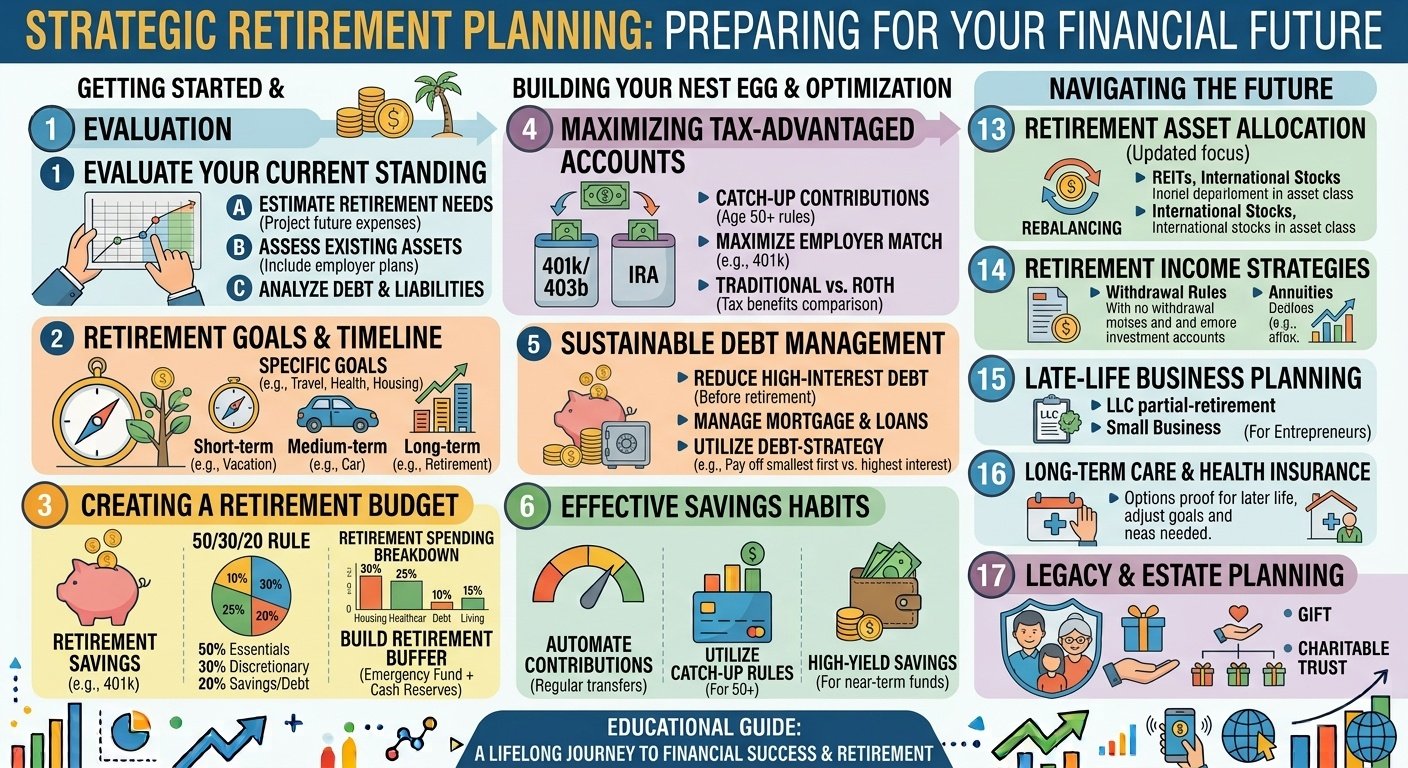
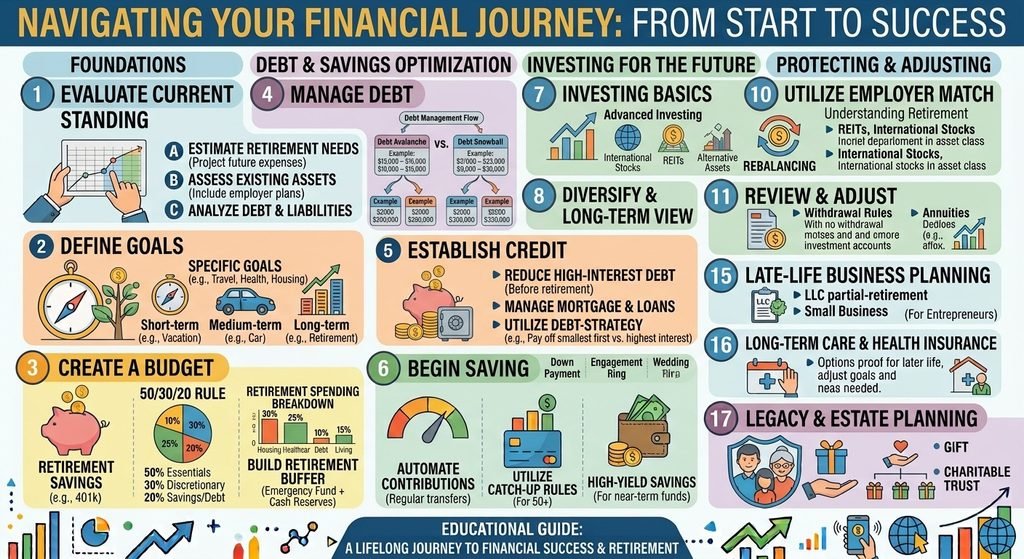
Steps to Build a Retirement Plan
1. Estimate Your Retirement Needs
Consider your expected lifestyle, expenses, and any other income sources you might have in retirement, such as government benefits or rental income.
2. Take Advantage of Employer Matching
If your employer offers a matching contribution, contributing enough to receive the full match is often considered a foundational step, since it represents an immediate, guaranteed return on your contribution.
3. Choose Appropriate Retirement Accounts
Depending on what’s available to you and your specific tax situation, this might involve a combination of employer-sponsored plans and individual retirement accounts.
4. Determine an Appropriate Investment Mix
Retirement savings are often invested in a mix of stocks, bonds, and other assets, with the specific mix depending on your time horizon and risk tolerance. Many people gradually shift toward more conservative investments as retirement approaches, though the right approach varies by individual.
5. Increase Contributions Over Time
As your income grows, increasing your retirement contributions — even gradually — can meaningfully improve your long-term outcome, particularly when raises or bonuses provide natural opportunities to increase savings without affecting your current budget.
6. Review and Adjust Periodically
Your retirement plan should be reviewed periodically, particularly after major life changes like a new job, marriage, or shifts in your expected retirement timeline or lifestyle goals.
Common Retirement Planning Mistakes
- Starting too late, missing out on years of potential compound growth
- Not contributing enough to receive a full employer match, effectively leaving available benefits unused
- Being too conservative too early, which can limit long-term growth potential for younger savers with a long time horizon
- Underestimating healthcare costs in retirement, which can be a significant and sometimes overlooked expense
- Withdrawing from retirement accounts early, which can result in penalties, taxes, and lost future growth, depending on the account type and applicable rules
- Not accounting for inflation, which can erode purchasing power over a long retirement
Balancing Retirement Savings With Other Goals
Retirement is often just one of several financial goals competing for the same income, alongside things like debt payoff, emergency savings, or shorter-term goals. A reasonable approach often involves:
- Building a basic emergency fund first
- Contributing enough to capture any available employer match
- Addressing high-interest debt
- Gradually increasing retirement contributions and other savings goals over time
The right balance depends on individual circumstances, interest rates on any debt, and personal priorities.
Key Takeaways
- Retirement planning benefits significantly from starting early, due to the power of compound growth over time.
- How much you need for retirement depends on your lifestyle, expenses, and other income sources — there’s no single universal number.
- Employer-sponsored plans, individual retirement accounts, and government programs are common building blocks of retirement savings, though specific rules vary by location.
- Capturing a full employer match, when available, is often considered a foundational step in retirement planning.
- Reviewing and adjusting your retirement plan periodically helps keep it aligned with your changing circumstances and goals.
Conclusion
Retirement planning is a long-term process that benefits enormously from starting early and staying consistent. While the specific tools, accounts, and rules can vary and change over time, the core principles remain steady: understand your future needs, take advantage of available benefits like employer matching, invest appropriately for your time horizon, and review your plan regularly as your life evolves.