Plenty of people try budgeting at some point, only to abandon it a few weeks later because it felt restrictive, overly complicated, or simply didn’t match how they actually live. The problem usually isn’t budgeting itself — it’s that the approach they tried didn’t fit their situation. A budget that “works” isn’t the most detailed or complex one; it’s the one you’ll actually stick with long enough to see results.
This guide walks through how to build a monthly budget that’s realistic, sustainable, and genuinely useful, along with a few common budgeting methods to choose from.
What a Budget Actually Is
At its core, a budget is a plan that matches your income to your expenses and savings goals over a set period — typically a month. Rather than spending first and seeing what’s left, budgeting flips the order: you decide in advance where your money will go, which makes it far easier to spot problems, prioritize goals, and avoid overspending before it happens.
A good budget isn’t about restriction for its own sake. It’s about giving yourself visibility and intention over money that would otherwise just come and go without much thought.
Step 1: Calculate Your Total Monthly Income
Start with a clear, accurate picture of how much money you actually bring in each month. This includes your primary income after taxes (your take-home pay), along with any consistent secondary income, like freelance work or a side business.
If your income varies month to month, it’s often safer to budget based on your lowest typical month, rather than your average or best month, to avoid overcommitting money you might not reliably have available.
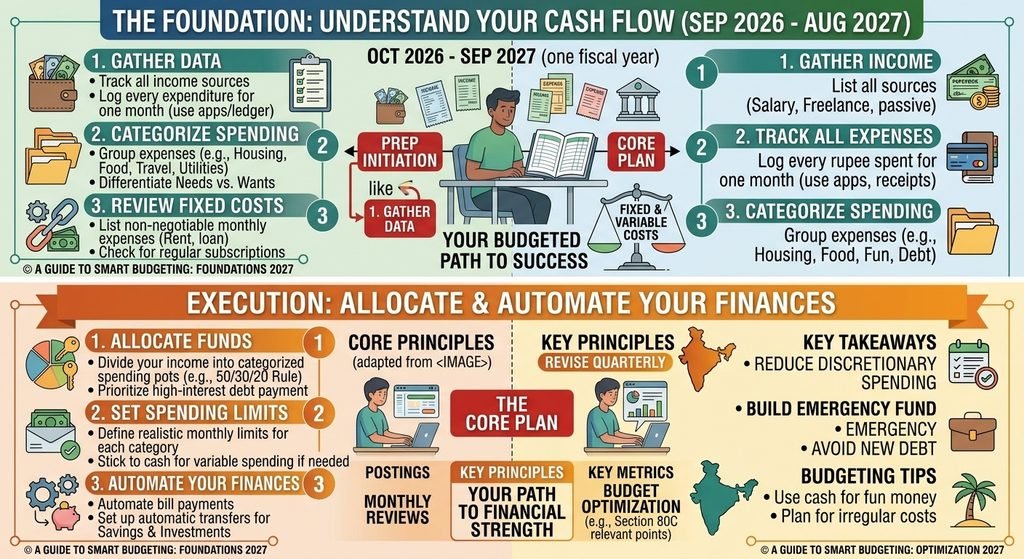
Step 2: List and Categorize Your Expenses
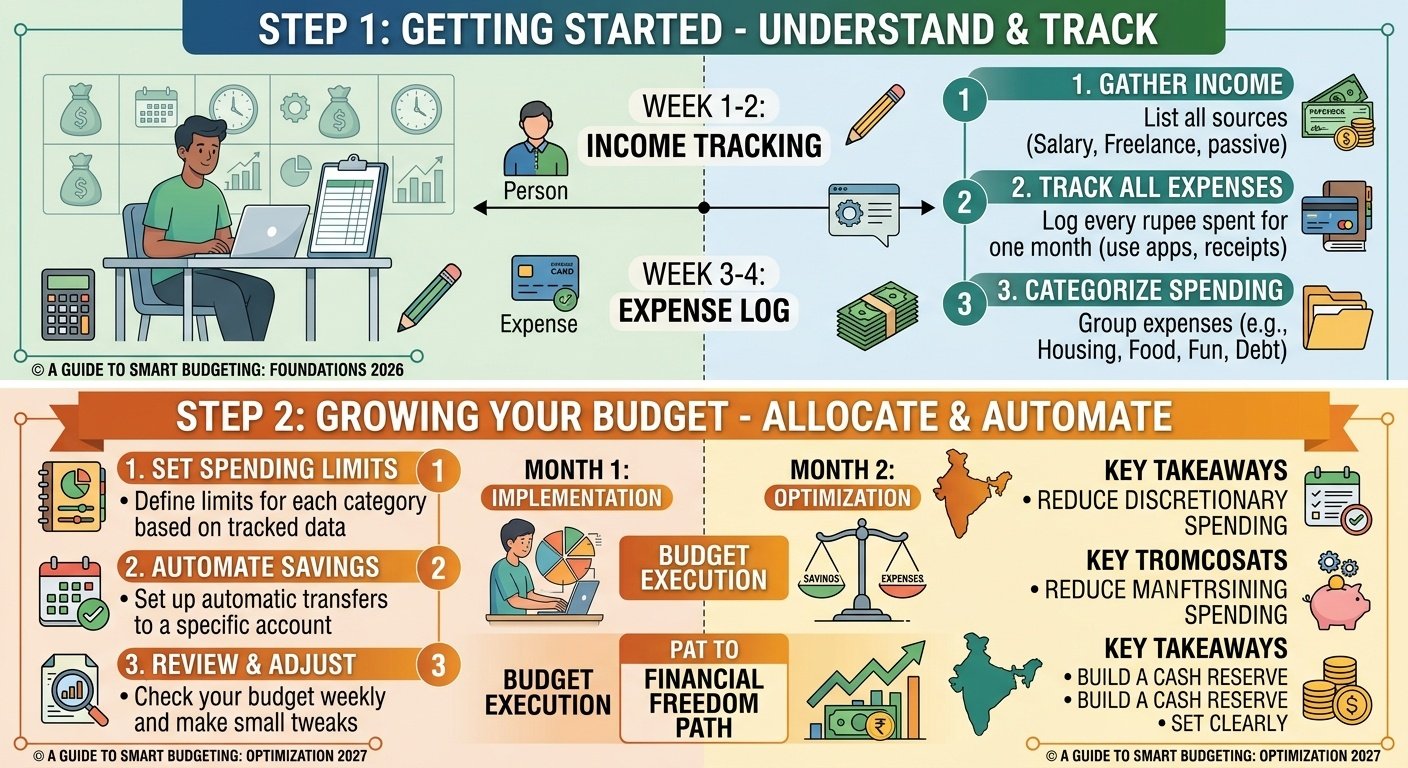
Next, get a clear view of where your money currently goes. This usually means reviewing a month or two of bank and card statements to identify your actual spending patterns, rather than guessing.
Expenses generally fall into a few broad categories:
- Fixed expenses — Costs that stay roughly the same each month, like rent or mortgage payments, insurance, and loan payments.
- Variable essential expenses — Necessary costs that fluctuate, like groceries, utilities, and fuel.
- Discretionary spending — Non-essential costs like dining out, entertainment, and subscriptions.
- Savings and debt repayment — Money set aside for goals or extra payments toward existing debt.
Categorizing your spending this way makes it much easier to see where adjustments are realistically possible, versus which costs are largely fixed.
Step 3: Choose a Budgeting Method
There’s no single “correct” way to budget — different methods suit different personalities and financial situations. A few of the most common approaches:
The 50/30/20 Rule
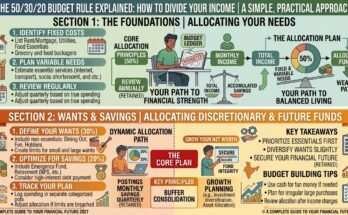
This method allocates roughly 50% of after-tax income to needs, 30% to wants, and 20% to savings and debt repayment. It’s a simple, flexible starting framework, particularly useful for beginners who don’t want to track every individual expense category in detail.
Zero-Based Budgeting
With this approach, every dollar of income is assigned a specific job — expenses, savings, or debt repayment — until the total equals zero. This method offers more precision and control than percentage-based rules, though it requires more ongoing tracking and adjustment.
The Envelope System
Traditionally done with physical cash divided into labeled envelopes for different spending categories (and now commonly replicated digitally), this method enforces spending limits directly — once an envelope’s money is gone, spending in that category stops for the month. It can be particularly effective for people who tend to overspend in specific discretionary categories.
Pay-Yourself-First Budgeting
This method prioritizes savings and debt repayment immediately when income arrives, before any other spending happens, with the remaining amount available for everyday expenses. It works well for people who find it easier to build good savings habits automatically rather than trying to save whatever happens to be left at the end of the month.
There’s no need to pick the “best” method in some universal sense — the most effective budget is the one that matches your habits closely enough that you’ll actually maintain it.
Step 4: Set Realistic Spending Limits
Once you’ve chosen a method, assign specific spending limits to each category based on your income and expense review. It’s important to be realistic here — setting overly strict limits that don’t reflect how you actually live tends to lead to budget abandonment within the first month or two.
If your current spending significantly exceeds your income, look first at discretionary categories for adjustment room before cutting into essential expenses, and consider whether any fixed costs (like subscriptions or recurring services) can reasonably be reduced or eliminated.
Step 5: Track Your Spending Throughout the Month
A budget only works if you actually compare it against real spending as the month progresses, rather than setting it once and forgetting about it. This doesn’t need to be complicated — a simple spreadsheet, a budgeting app, or even a basic notes app can work, as long as you’re checking in regularly enough to catch overspending before it becomes a pattern.
Step 6: Review and Adjust Monthly
At the end of each month, compare your actual spending against your planned budget. Some categories will likely be over, others under — this is completely normal, especially in the first few months. Use this review to adjust your budget for the following month, rather than treating your first attempt as something set in stone.
Budgets should evolve as your income, expenses, and goals change over time. A budget that worked well a year ago may no longer fit your current situation, and that’s expected.
Why Budgets Often Fail — and How to Avoid It
Being Too Restrictive
Cutting discretionary spending to zero often backfires, leading to a sense of deprivation that results in abandoning the budget altogether. Building in some reasonable amount for enjoyment, even if modest, tends to make a budget more sustainable long-term.
Not Accounting for Irregular Expenses
Expenses that don’t occur monthly — car maintenance, annual insurance premiums, holiday gifts — are easy to forget when building a monthly budget, leading to unplanned overspending when they arise. Setting aside a small amount monthly for these irregular costs helps smooth this out.
Giving Up After One Bad Month
A single month of overspending doesn’t mean budgeting “doesn’t work” for you — it usually just means an adjustment is needed. Treating budgeting as an ongoing, adjustable process rather than a pass/fail test makes it far more sustainable.
Overcomplicating the System
Tracking every single expense down to the last coin can become exhausting and unsustainable for many people. Choosing a level of detail that matches your patience for tracking — even if less precise — is often more effective than a highly detailed system you abandon after two weeks.
Tools That Can Help
Budgeting doesn’t require expensive software. Options range from a basic spreadsheet template, to free budgeting apps that automatically categorize bank transactions, to the simple envelope method using physical or digital categories. The right tool is largely a matter of personal preference — what matters most is consistency in using it.
Key Takeaways
- A budget matches income to expenses and savings goals in advance, rather than reacting after money has already been spent.
- Common budgeting methods include the 50/30/20 rule, zero-based budgeting, the envelope system, and pay-yourself-first budgeting.
- Realistic spending limits, based on actual past spending, are more sustainable than overly strict, unrealistic ones.
- Regularly tracking and reviewing your budget is what makes it effective over time, not just creating it once.
- Budgets should be adjusted as circumstances change — a rigid, unchanging budget often leads to abandonment.
Conclusion
A monthly budget that actually works isn’t the most complex or restrictive one — it’s the one built around your real income, real spending habits, and a method you’re genuinely willing to stick with. Treating your budget as a flexible, evolving tool rather than a rigid set of rules makes it far more likely to become a lasting habit, rather than something abandoned after a few frustrating weeks.