Unexpected expenses aren’t a matter of if, but when — a car repair, a medical bill, a sudden job loss, or an urgent home repair can show up at almost any time, regardless of how carefully you’ve planned your finances. An emergency fund exists specifically to absorb these shocks without derailing your broader financial situation or forcing you into high-interest debt just to get through a difficult month.
This guide explains what an emergency fund actually is, how to figure out the right amount for your situation, and where to keep it so it’s genuinely useful when you need it.
What Is an Emergency Fund?
An emergency fund is money set aside specifically to cover unexpected, essential expenses — separate from your regular savings goals like a vacation fund or a home down payment. Its defining purpose is to provide a financial buffer during genuine emergencies, allowing you to handle unexpected costs without relying on credit cards, loans, or draining savings meant for other goals.
The key word here is “unexpected.” An emergency fund isn’t meant to cover planned expenses, discretionary purchases, or costs you already knew were coming — it’s specifically for situations that couldn’t reasonably have been predicted or budgeted for in advance.
What Counts as a True Financial Emergency?
Not every unplanned expense qualifies as an emergency in the way an emergency fund is meant to cover. Genuine emergencies typically share three characteristics: they’re necessary, unexpected, and urgent. Common examples include:
- Job loss or a sudden significant reduction in income
- Major medical or dental expenses not covered by insurance
- Urgent car repairs needed to maintain reliable transportation
- Essential home repairs, like a broken furnace or a plumbing failure
- Unexpected travel required for a family emergency
By contrast, expenses like a holiday sale, a planned vacation, or a new phone upgrade — even if unbudgeted — generally don’t qualify as true emergencies, since they’re either not urgent, not necessary, or reasonably could have been planned for in advance.
Why an Emergency Fund Matters So Much
Without a dedicated emergency fund, unexpected expenses often get absorbed through high-interest credit card debt or loans, which can turn a temporary setback into a longer-term financial burden due to accumulating interest. An emergency fund breaks this cycle by providing a resource specifically set aside for exactly these situations, allowing you to handle the immediate cost without creating new debt in the process.
Beyond the practical financial protection, having an emergency fund also provides genuine peace of mind — reducing the anxiety that comes with financial uncertainty and giving you more confidence and flexibility in other areas of life, including career decisions.
How Much Should Be in an Emergency Fund?
This is one of the most common questions in personal finance, and the honest answer is: it depends on your specific circumstances. That said, there are widely used general guidelines to work from.
The Standard Guideline: Three to Six Months of Expenses
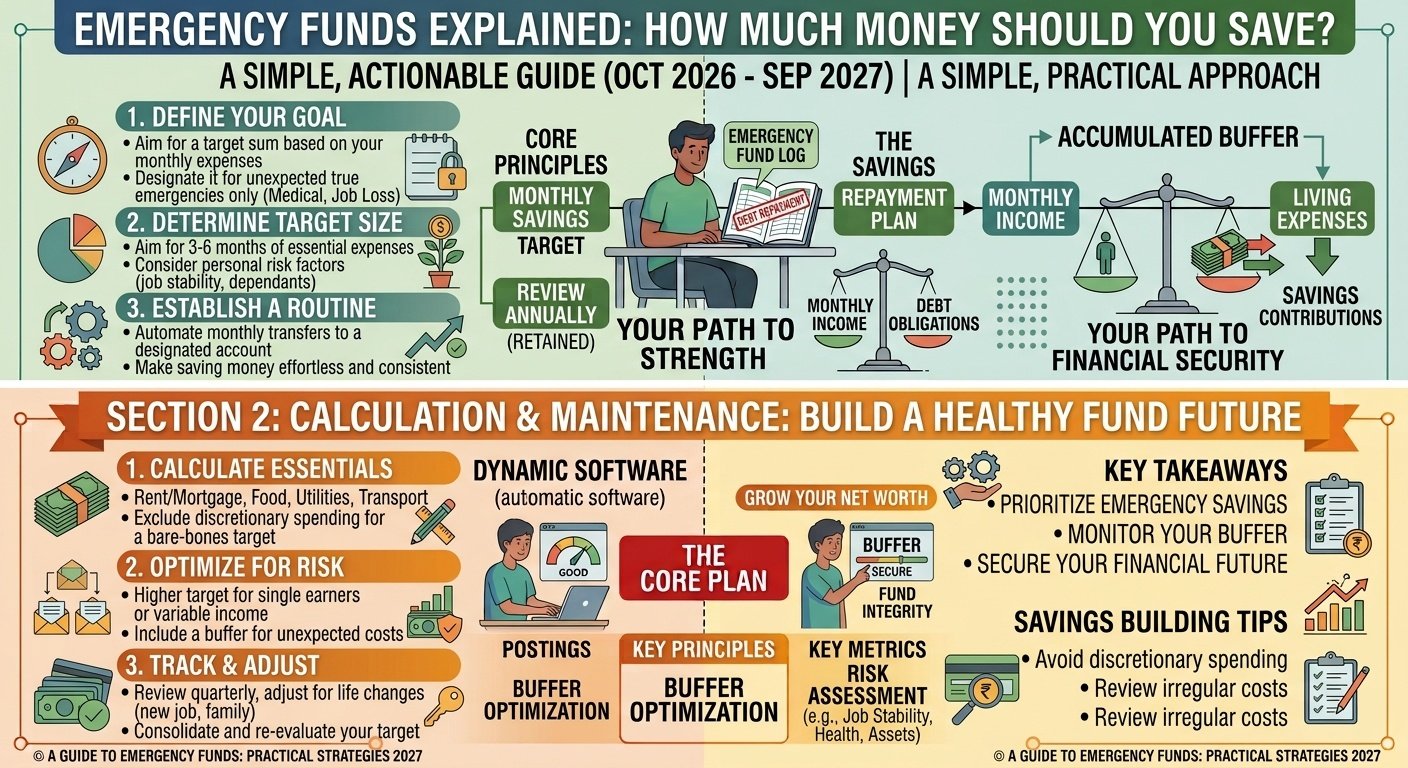
A commonly cited benchmark suggests keeping three to six months’ worth of essential living expenses in your emergency fund. This is based on essential expenses — housing, utilities, groceries, insurance, minimum debt payments — rather than your full income or total discretionary spending, since the goal is covering necessities during a disruption, not maintaining your entire normal lifestyle.
Factors That Might Push You Toward a Larger Fund
- Irregular or variable income, such as freelance work or commission-based earnings, where income predictability is lower
- Being the sole income earner in a household, with no secondary income to fall back on
- Working in an industry with less job security or higher layoff risk
- Having dependents who rely on your income for essential needs
- Owning a home, given the potential for larger, less predictable repair costs
Factors That Might Allow for a Smaller Fund
- Stable, predictable income, such as steady employment in a secure field
- A second household income providing a financial backup
- Strong job security with in-demand skills and low unemployment risk in your field
- Minimal fixed obligations, such as no dependents and low essential monthly expenses
How to Calculate Your Specific Target
- Add up your essential monthly expenses — housing, utilities, groceries, insurance, minimum debt payments, and any other genuinely necessary costs.
- Choose a target range (commonly three to six months) based on your personal risk factors from the lists above.
- Multiply your essential monthly expenses by your chosen number of months to calculate your target emergency fund amount.
For example, if your essential monthly expenses total $2,500 and you’ve decided a four-month cushion fits your situation, your target emergency fund would be $10,000.
Building an Emergency Fund When You’re Starting From Zero
Reaching a full three-to-six-month target can feel overwhelming if you’re starting with no savings at all. Breaking the process into smaller stages tends to make it more manageable:
Stage 1: A Starter Fund
Begin by aiming for a smaller initial goal — enough to cover a single, moderate unexpected expense (a common suggested starting point is a few hundred to one thousand dollars, depending on your circumstances). This starter fund alone can prevent many common emergencies from becoming debt.
Stage 2: One Month of Expenses
Once your starter fund is in place, work toward covering one full month of essential expenses, giving you a more meaningful buffer against a temporary disruption.
Stage 3: Full Target Range
From there, continue building gradually toward your full three-to-six-month target, adjusting your pace based on what your budget realistically allows.
Automating regular contributions toward your emergency fund, even in small amounts, tends to be far more sustainable than trying to build it through occasional large deposits.
Where Should You Keep Your Emergency Fund?
An emergency fund needs to strike a balance between accessibility and separation from everyday spending. A few key considerations:
- Liquidity matters. Your emergency fund should be accessible relatively quickly, without penalties for withdrawal — this generally rules out things like long-term investments or accounts with early withdrawal penalties.
- Separation from everyday spending helps. Keeping your emergency fund in a separate account from your regular checking account reduces the temptation to dip into it for non-emergencies.
- A savings account is a common choice, since it typically offers reasonable accessibility while keeping the funds separate from daily spending, and may offer some interest, unlike cash kept at home.
- Avoid tying it up in investments. While investing can offer higher potential returns, it also introduces the risk of the fund’s value dropping right when you might need to access it during an actual emergency — which defeats the purpose of the fund’s stability.
Common Emergency Fund Mistakes to Avoid
Using It for Non-Emergencies
It’s tempting to dip into an emergency fund for a good sale or an appealing but unplanned purchase. Maintaining a clear, honest definition of what qualifies as a genuine emergency helps preserve the fund for its actual purpose.
Not Replenishing It After Use
If you do need to use your emergency fund for a genuine emergency, prioritizing rebuilding it afterward — even gradually — ensures you remain protected for the next unexpected event.
Keeping It Too Accessible
While liquidity matters, keeping emergency funds in an account too easily accessible (like directly linked to a debit card you use daily) can make it easier to dip into casually. Some separation, even if the funds remain technically liquid, can help maintain discipline.
Setting an Unrealistic Initial Target
Trying to reach a full six-month fund immediately, without breaking the goal into smaller stages, often leads to discouragement. Starting with a smaller, achievable milestone tends to build momentum more effectively.
Key Takeaways
- An emergency fund is money set aside specifically for unexpected, necessary, and urgent expenses.
- A commonly used guideline suggests three to six months of essential living expenses, adjusted based on personal risk factors like income stability and dependents.
- Building an emergency fund gradually, starting with a smaller initial goal, tends to be more sustainable than attempting to reach the full target immediately.
- Emergency funds should be kept in an accessible but separate account, generally not tied up in investments.
- Replenishing the fund after use is just as important as building it in the first place.
Conclusion
An emergency fund is one of the most foundational pieces of a solid financial plan — not because it grows your wealth directly, but because it protects everything else you’re building from being disrupted by an unexpected setback. Calculating a target based on your specific essential expenses and risk factors, then building toward it gradually, turns an intimidating goal into a manageable, ongoing habit.