Opening a bank account might seem straightforward, but with so many account types, fee structures, and features available, choosing the right one can feel more complicated than it should be. The account you choose affects how easily you can access your money, how much you pay in fees, and even how much your savings can grow over time.
This guide walks through the key factors to consider when choosing a bank account, so you can select one that genuinely fits your financial habits and goals.
Why the Right Bank Account Matters
A bank account isn’t just a place to store money — it’s a tool that should support your financial habits. The right account can help you avoid unnecessary fees, earn more interest, and manage your money more efficiently. The wrong account, on the other hand, can quietly drain your balance through fees or make it harder to reach your savings goals.
Common Types of Bank Accounts
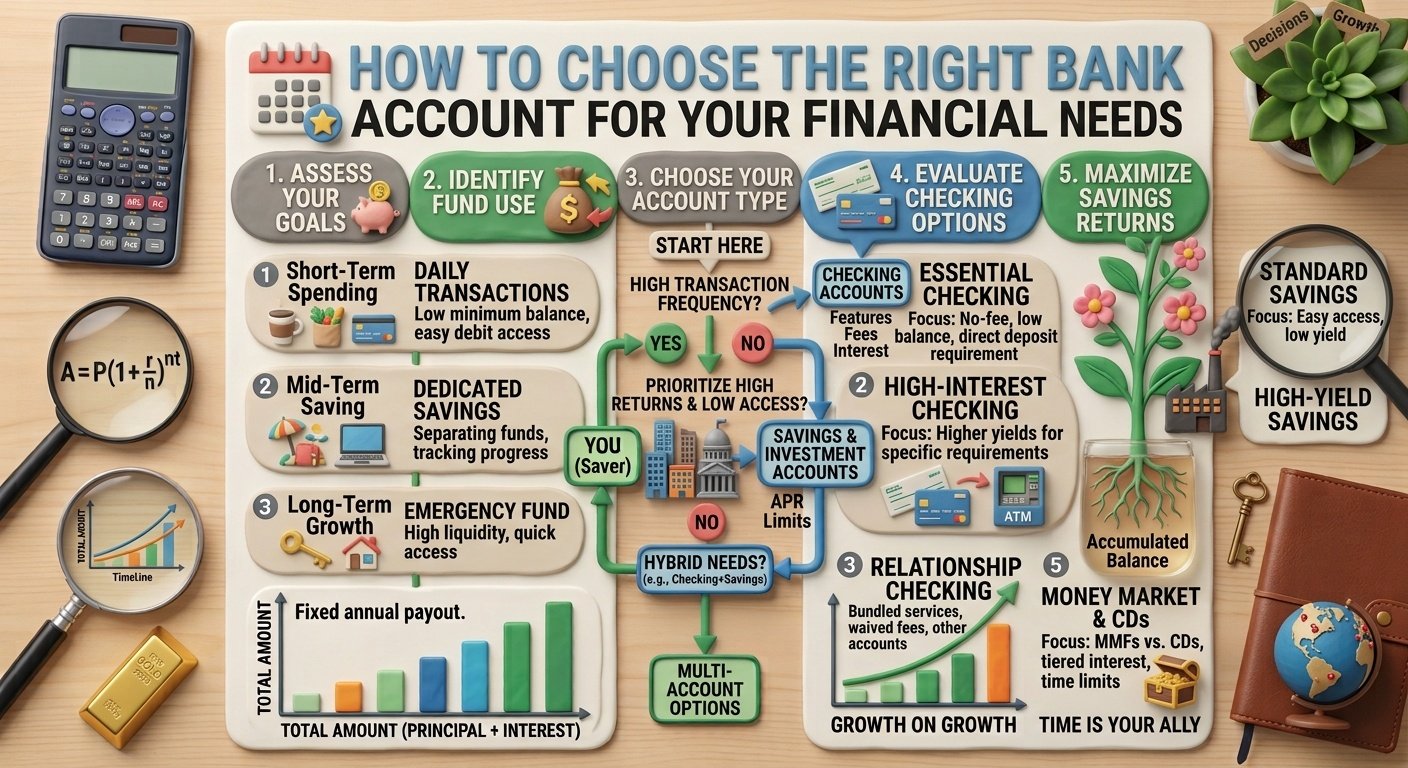
Before comparing specific accounts, it helps to understand the main categories available.
Checking Accounts
Designed for everyday transactions like bill payments, purchases, and receiving your paycheck. These accounts typically offer easy access through debit cards and online banking but usually earn little to no interest.
Savings Accounts
Designed for setting money aside rather than frequent spending. Savings accounts typically earn interest, though rates vary widely between banks.
High-Yield Savings Accounts
A type of savings account that offers a significantly higher interest rate than a traditional savings account, often available through online banks with lower overhead costs.
Money Market Accounts
A hybrid account that often combines features of checking and savings accounts, sometimes offering higher interest rates along with limited check-writing or debit card access.
Certificates of Deposit (CDs)
Accounts where you deposit money for a fixed term in exchange for a fixed interest rate, generally higher than standard savings accounts. Early withdrawal often results in a penalty.
Specialty Accounts
Some banks offer accounts designed for specific goals, such as student accounts, joint accounts, or accounts tailored for retirement savings.
Key Factors to Consider When Choosing a Bank Account
1. Your Primary Purpose for the Account
Start by identifying what you need the account for. Are you looking for a place to handle daily spending, or somewhere to grow long-term savings? Your primary goal should guide which account type you prioritize.
2. Interest Rates
If you’re opening a savings-focused account, compare interest rates across banks. Even small differences in interest rates can add up meaningfully over time, especially for larger balances.
3. Fees
Review the fee structure carefully, including:
- Monthly maintenance fees
- Minimum balance requirements
- Overdraft fees
- ATM fees
- Excess transaction fees
Some banks waive certain fees if you meet specific conditions, such as maintaining a minimum balance or setting up direct deposit.
4. Accessibility
Consider how you’ll need to access your money. Do you need a widespread ATM network, mobile banking features, or in-person branch access? Online-only banks often offer higher interest rates but may lack physical branches.
5. Minimum Balance Requirements
Some accounts require a minimum balance to avoid fees or to earn the advertised interest rate. Make sure any minimum requirement fits comfortably within your typical account balance.
6. Customer Service and Support
Reliable customer service matters, especially if issues arise with your account. Look into the bank’s reputation for support, whether through phone, chat, or in-person assistance.
7. Security Features
Look for accounts with strong security measures, such as fraud monitoring, two-factor authentication, and deposit insurance, which protects your money up to a certain limit in the event the bank fails.
Comparing Traditional Banks vs Online Banks
| Feature | Traditional Banks | Online Banks |
|---|---|---|
| Interest rates | Often lower | Often higher |
| Physical branches | Yes | Usually none |
| Fees | Can be higher | Often lower or fewer |
| ATM access | Wide branch networks | Often reimbursed ATM fees |
| In-person support | Available | Limited to phone/chat |
Neither option is universally better — the right choice depends on whether you value in-person banking or prioritize higher interest rates and lower fees.
Practical Steps to Choosing the Right Account
- Identify your primary need — spending, saving, or a combination of both.
- List your must-have features, such as no monthly fees, mobile check deposit, or a certain minimum interest rate.
- Compare at least three banks or account options, reviewing interest rates, fees, and account requirements.
- Read the fine print, including fee schedules and any conditions tied to promotional interest rates.
- Consider using multiple accounts, such as a checking account for spending and a separate high-yield savings account for goals.
Common Mistakes to Avoid
- Choosing an account based on convenience alone, without comparing interest rates or fees.
- Ignoring minimum balance requirements, which can lead to unexpected fees.
- Ignoring interest rate differences, especially for savings-focused accounts.
- Not reading the fee disclosure, which can hide costs like inactivity fees or paper statement fees.
- Keeping all your money in one account type, missing opportunities to separate spending from savings.
Key Takeaways
- The right bank account depends on your specific financial goals, whether that’s everyday spending, saving, or both.
- Interest rates and fees vary significantly between banks, making comparison shopping worthwhile.
- Online banks often offer higher interest rates and lower fees, while traditional banks may offer more in-person support.
- Using multiple account types together, such as a checking and a high-yield savings account, can support better overall money management.
Conclusion
Choosing the right bank account isn’t just about picking a familiar name or the nearest branch — it’s about matching the account’s features to your actual financial habits and goals. By comparing interest rates, understanding fee structures, and identifying what you truly need from an account, you can select a banking setup that supports your financial life rather than working against it.