At some point, most people will consider taking out a loan — whether to buy a car, cover a large expense, finance an education, or purchase a home. Loans can be useful financial tools when used appropriately, but they also come with costs and risks that are important to understand before signing any agreement.
This guide breaks down how loans work, the main types available, how interest rates are determined, and the key factors to consider before borrowing.
What Is a Loan?
A loan is an amount of money borrowed from a lender — such as a bank, credit union, or online lending company — that is repaid over time, typically with interest. Interest is essentially the cost of borrowing money, and it’s usually expressed as a percentage of the loan amount, known as the interest rate.
Most loans include:
- Principal: The original amount borrowed
- Interest rate: The cost of borrowing, expressed as a percentage
- Term: The length of time you have to repay the loan
- Monthly payment: The amount due each period, usually covering both principal and interest
Secured vs Unsecured Loans
Loans generally fall into two broad categories based on whether they require collateral.
Secured Loans
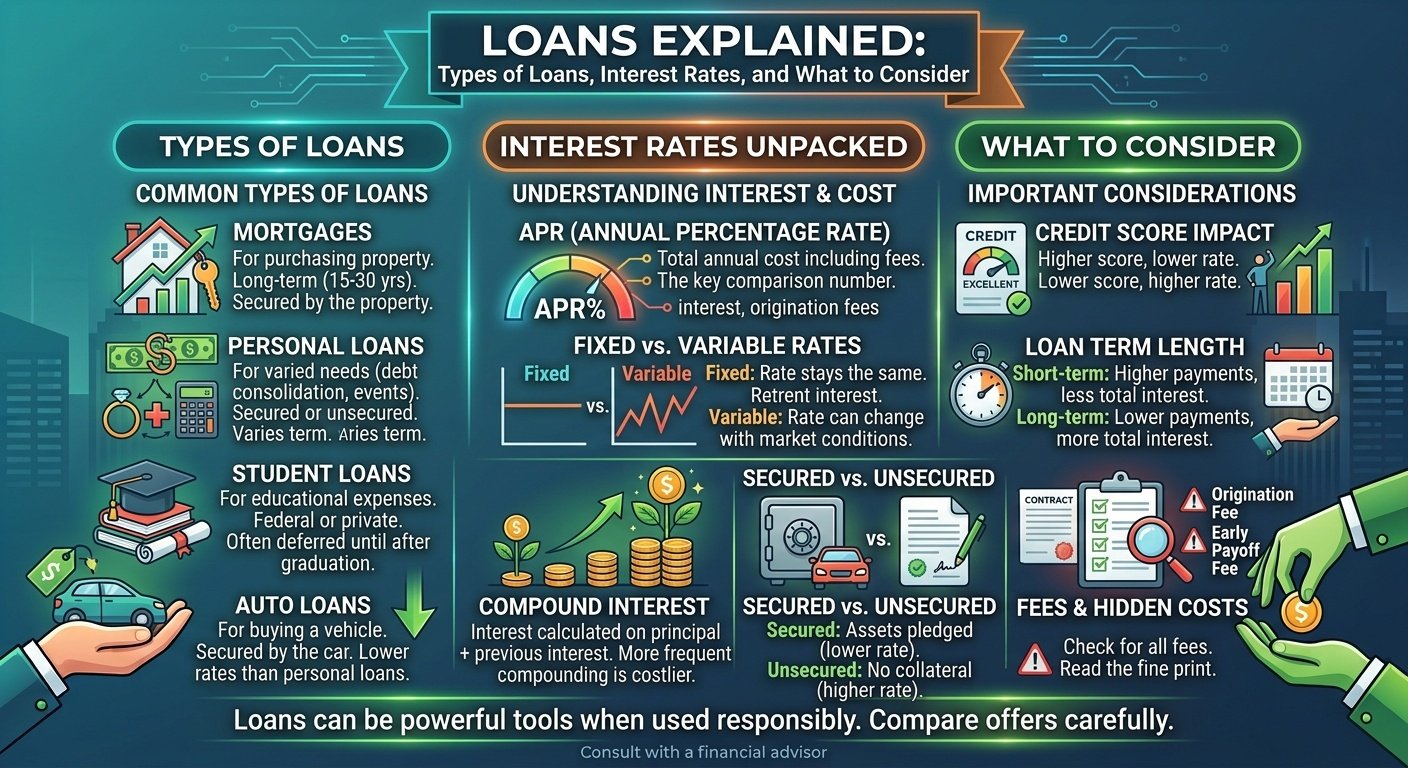
A secured loan is backed by collateral — an asset the lender can claim if you fail to repay the loan. Common examples include:
- Mortgages, secured by the home itself
- Auto loans, secured by the vehicle
- Secured personal loans, backed by savings or other assets
Because the lender has some protection if you default, secured loans often come with lower interest rates than unsecured loans.
Unsecured Loans
An unsecured loan doesn’t require collateral. Instead, the lender relies on your creditworthiness — your credit score, income, and financial history — to determine approval and interest rate. Common examples include:
- Personal loans
- Most credit cards
- Student loans (in many cases)
Because there’s no collateral to reduce the lender’s risk, unsecured loans often carry higher interest rates than comparable secured loans.
Common Types of Loans
Personal Loans
Personal loans are typically unsecured and can be used for a variety of purposes, such as debt consolidation, home improvements, or unexpected expenses. They usually come with fixed interest rates and fixed monthly payments over a set term.
Auto Loans
Auto loans are secured by the vehicle being purchased. If payments aren’t made, the lender can repossess the car. Interest rates vary based on factors like credit score, loan term, and whether the vehicle is new or used.
Mortgages
Mortgages are long-term loans used to purchase real estate, secured by the property itself. They often have terms of 15 to 30 years and can come with fixed or adjustable interest rates.
Student Loans
Student loans are used to finance education costs. They may be offered by government programs or private lenders, and terms, interest rates, and repayment options can vary significantly between the two.
Payday Loans
Payday loans are short-term, small-dollar loans typically due on your next payday. They often carry extremely high fees and interest rates, and are generally considered a high-risk borrowing option that’s best avoided except in genuine emergencies with no other alternatives.
How Loan Interest Rates Work
Interest rates on loans can be either fixed or variable.
- Fixed interest rates stay the same for the entire loan term, meaning your payments remain predictable.
- Variable interest rates can change over time based on broader market conditions, which means your payments could increase or decrease.
Several factors typically influence the interest rate you’re offered, including:
- Your credit score and credit history
- Your income and existing debt levels
- The loan amount and term length
- Whether the loan is secured or unsecured
- General market interest rate conditions at the time of borrowing
Because rates and lending criteria can change based on broader economic conditions, it’s worth checking current rates from a trustworthy source when comparing loan offers, rather than relying on outdated figures.
Understanding APR
When comparing loans, it’s important to look at the Annual Percentage Rate (APR) rather than just the interest rate. APR includes the interest rate plus certain fees associated with the loan, giving a more complete picture of the loan’s total cost. Two loans with the same interest rate can have different APRs if one includes higher fees.
What to Consider Before Taking Out a Loan
Do you actually need to borrow? Consider whether saving up for the expense, even partially, could reduce how much you need to borrow.
Can you afford the monthly payment? Look at your budget realistically, factoring in existing expenses and other debt obligations.
What’s the total cost of the loan? Multiply your monthly payment by the number of payments to see the total amount you’ll repay, including interest.
What happens if you can’t make a payment? Understand the lender’s policies on late payments, and for secured loans, understand the risk to your collateral.
Are there prepayment penalties? Some loans charge a fee for paying off the balance early, which can affect your strategy if you plan to pay ahead of schedule.
Is this the best available rate? Comparing offers from multiple lenders, including banks, credit unions, and online lenders, can help you find more favorable terms.
Table: Common Loan Types at a Glance
| Loan Type | Secured or Unsecured | Typical Use |
|---|---|---|
| Personal Loan | Usually unsecured | Debt consolidation, expenses |
| Auto Loan | Secured | Vehicle purchase |
| Mortgage | Secured | Home purchase |
| Student Loan | Usually unsecured | Education costs |
| Payday Loan | Unsecured | Short-term cash needs (high risk) |
Common Mistakes to Avoid
- Borrowing more than necessary because a larger amount was approved
- Focusing only on the monthly payment without considering total interest cost
- Not comparing offers from multiple lenders
- Ignoring the APR and focusing only on the advertised interest rate
- Missing the fine print on fees, penalties, or variable rate terms
Key Takeaways
- A loan involves borrowing money that’s repaid over time, typically with interest.
- Secured loans are backed by collateral and often have lower rates; unsecured loans rely on creditworthiness and often have higher rates.
- Common loan types include personal loans, auto loans, mortgages, and student loans — each with different terms and risks.
- APR gives a more complete picture of a loan’s cost than the interest rate alone.
- Always compare offers, understand the total repayment cost, and confirm you can comfortably afford the payments before borrowing.
Conclusion
Loans can be a practical way to finance major expenses, but they come with real costs and responsibilities. Understanding the type of loan you’re considering, how interest rates work, and the total cost of borrowing can help you make a more informed decision. Before signing any loan agreement, take the time to compare offers, read the terms carefully, and confirm the payments fit comfortably within your budget.