There’s a frustrating catch-22 that many people encounter early in their financial lives: lenders want to see a credit history before extending credit, but you can’t build a credit history without first being extended some form of credit. If you’re starting with no credit history at all — whether you’re young, new to formal banking, or simply haven’t used credit products before — this guide walks through practical, realistic ways to start building a strong credit foundation.
Why Starting Early Matters
Credit history length is one of the factors that contributes to your overall credit score, meaning the earlier you responsibly establish credit, the more this factor works in your favor over time. Someone who starts building credit in their early twenties, even modestly, often has a meaningful head start over someone who begins a decade later, purely due to the accumulated length of responsible credit history.
This doesn’t mean you’re at a permanent disadvantage if you’re starting later — it simply means there’s genuine value in starting as soon as you’re in a position to do so responsibly, rather than delaying unnecessarily.
Starting Point: Understanding What Lenders Look For
When you have no credit history, lenders have no data to assess how reliably you manage borrowed money, which is why they’re often hesitant to extend significant credit initially. The practical solution is to start with credit products specifically designed for this situation, which typically involve lower risk for the lender while still giving you an opportunity to build a track record.
Practical Ways to Start Building Credit From Zero
Secured Credit Cards
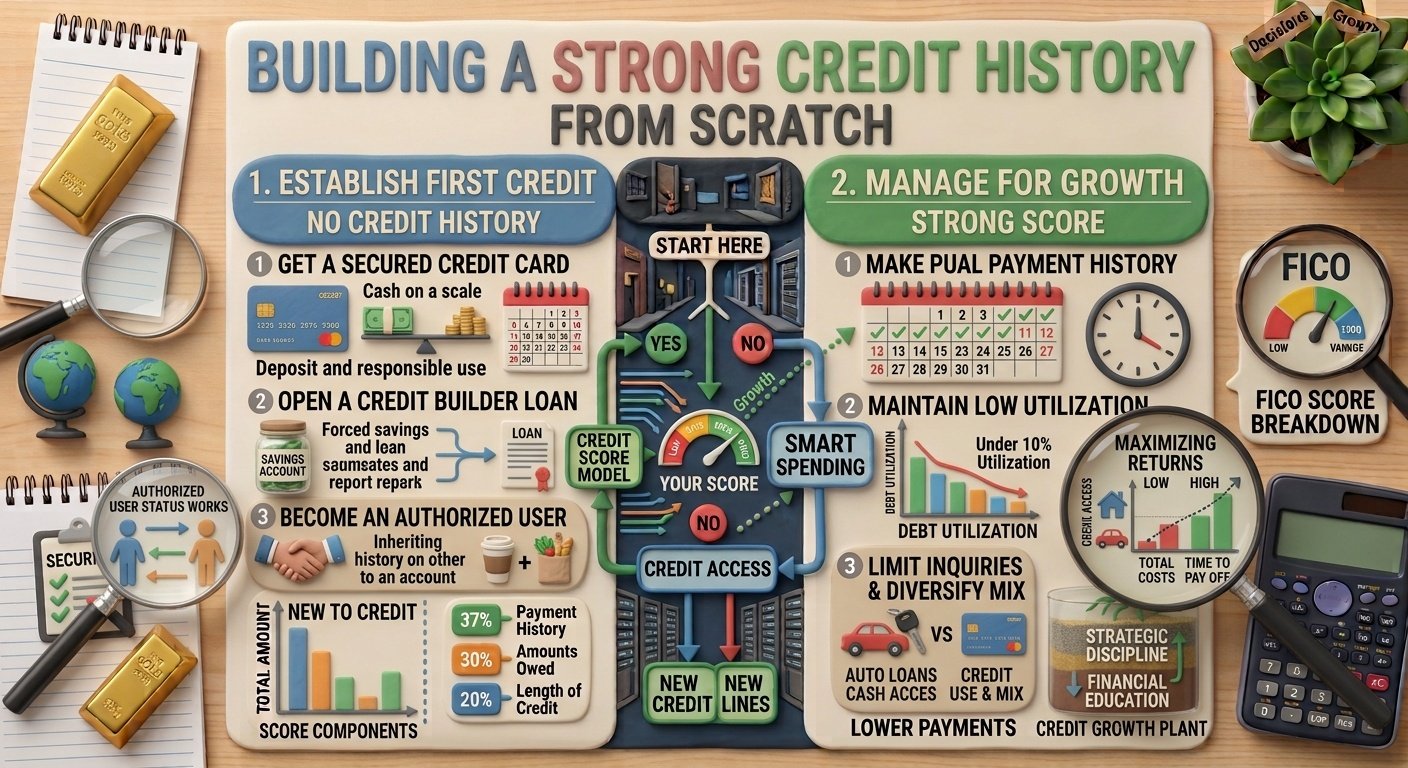
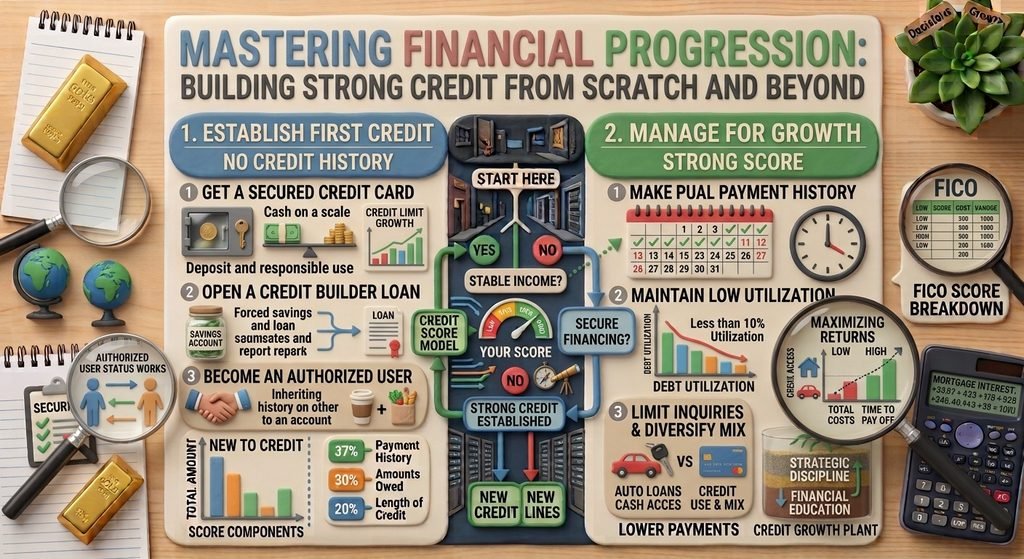
A secured credit card requires you to place a security deposit with the issuer, which typically becomes your credit limit. Because the deposit reduces the lender’s risk, secured cards are often accessible even to those with no prior credit history. Using a secured card responsibly — making small purchases and paying the balance in full and on time — helps build a positive payment history, and many issuers eventually offer to convert the account to a standard unsecured card, or return your deposit, once you’ve demonstrated consistent responsible use.
Becoming an Authorized User on Someone Else’s Account
If a trusted family member with an established, well-managed credit card account is willing to add you as an authorized user, their positive payment history on that account can sometimes reflect on your own credit report as well, giving you a head start even without directly managing the account yourself. This approach depends heavily on the primary account holder’s responsible credit behavior, since their late payments or high utilization could just as easily reflect negatively on your report.
Credit-Builder Loans
Some financial institutions offer credit-builder loans specifically designed for this purpose — rather than receiving the loan amount upfront, your payments are held in a secured account and released to you (often with any accrued interest) once you’ve completed the repayment schedule. This structure allows you to build a positive payment history with relatively low risk, since you’re essentially paying into a savings-like structure while demonstrating consistent on-time payments.
Student Credit Cards (If Applicable)
Some card issuers offer credit cards specifically designed for students, often with more accessible approval criteria and sometimes educational resources on responsible credit use built into the product, recognizing that students frequently have limited or no prior credit history.
Retail or Store Credit Cards
Store-specific credit cards, often available at checkout with a retailer, can sometimes be easier to qualify for than general-purpose credit cards, though they frequently carry higher interest rates and more limited usability outside that specific retailer. If you choose this route, treating it the same way you would any credit card — paying the balance in full and on time — is essential given the typically higher interest rates involved.
How to Actually Build Positive Credit History Once You Have Access
Make Every Payment On Time, Without Exception
Once you have access to any credit product, consistently paying on time is the single most important habit for building positive history, since payment history typically carries the heaviest weight in most credit scoring models. Setting up automatic minimum payments as a safety net, while still aiming to pay your full balance whenever possible, helps prevent accidental missed payments that could otherwise set back your progress.
Keep Utilization Low, Even With a Small Credit Limit
If you’re starting with a modest credit limit (common with secured or starter cards), keep your utilization reasonably low relative to that limit rather than regularly using most or all of your available credit, even if you’re paying it off in full each month. High utilization, even if temporary, can be reported to credit bureaus at the time your statement is generated, potentially affecting your score even with perfect payment behavior.
Avoid Applying for Multiple Credit Products Too Quickly
While it’s tempting to apply for several credit-building products simultaneously to accelerate the process, each application typically triggers a hard inquiry, and multiple inquiries in a short period can have a compounding negative effect. Start with one or two accessible credit-building options, use them consistently and responsibly, and expand your credit profile gradually as your history and score develop.
Monitor Your Progress Periodically
Regularly checking your credit report and score (which doesn’t harm your score, since self-checks are typically treated as soft inquiries) helps you track your progress and catch any errors or issues early, giving you a clear sense of how your responsible credit use is translating into an improving credit profile over time.
Common Mistakes People Make When Building Credit From Scratch
Believing You Need to Carry a Balance
A persistent misconception is that carrying an unpaid balance (rather than paying in full) helps build credit faster — this isn’t accurate and simply results in unnecessary interest charges without providing any additional credit-building benefit beyond what responsible full-balance payment already provides.
Missing Payments Due to Poor Tracking, Not Financial Inability
Particularly when managing a new credit product for the first time, some missed payments happen not due to genuine financial strain, but simply due to forgetting a due date or losing track of a new bill. Setting calendar reminders or automatic payments specifically for new credit accounts helps prevent this avoidable mistake during the critical early credit-building period.
Closing Your First Credit Account Too Soon
Once your credit profile improves and you qualify for better credit products, it might seem logical to close your original starter account, but doing so can shorten your average credit history length, which may work against the progress you’ve built. Consider keeping your original account open (even with minimal use, provided it doesn’t carry an unaffordable annual fee) rather than closing it immediately after building a stronger profile.
Expecting Immediate Results
Building meaningful credit history takes sustained time — often many months to a few years of consistent, responsible use — rather than showing dramatic improvement within just a few weeks. Approaching this process with realistic patience prevents discouragement that might otherwise lead to abandoning good habits prematurely.
A Realistic Timeline for Building Credit From Scratch
While exact timelines vary based on the specific scoring model, your consistency, and other individual factors, many people who start with an accessible credit-building product and maintain consistent, responsible use begin to see a meaningful, established credit history and reasonable score within roughly 6 to 12 months, with continued improvement over subsequent years as their credit history lengthens and their responsible behavior accumulates further.
Key Takeaways
- Starting to build credit early, even modestly, provides a meaningful long-term advantage since credit history length is a genuine scoring factor.
- Secured credit cards, credit-builder loans, authorized user arrangements, and student or store credit cards are practical, accessible starting points for those with no prior credit history.
- Consistent on-time payments and low credit utilization are the most important habits for building positive credit history, regardless of which specific product you start with.
- Avoid common mistakes like carrying unnecessary balances, applying for too many products too quickly, or closing your original account prematurely once your credit improves.
- Building meaningful credit history is a gradual process that typically takes several months to a few years of consistent responsible behavior.
Conclusion
Building credit from scratch takes patience and consistency, but it’s a manageable, well-defined process once you understand the accessible starting points available — secured cards, credit-builder loans, and authorized user arrangements — combined with the core habits of on-time payments and low utilization. Starting this process deliberately, even with modest initial steps, builds a foundation that pays off in better financial opportunities over the following years.