If you’ve ever opened a bank account, you’ve probably been asked to choose between a checking account and a savings account — or told to open both. While they might seem similar on the surface, these two account types serve very different purposes in your financial life. Understanding the difference can help you manage your money more efficiently, avoid unnecessary fees, and make the most of the interest your money can earn.
This guide explains exactly what checking and savings accounts are, how they differ, and how to decide which one fits a particular financial need.
What Is a Checking Account?
A checking account is a bank account designed for frequent, everyday transactions. It’s the account most people use to pay bills, make purchases, receive their paycheck, and handle day-to-day spending.
Key Features of a Checking Account
- Frequent access: Designed for regular deposits and withdrawals.
- Debit card and checks: Usually comes with a debit card and the ability to write checks.
- Low or no interest: Most checking accounts earn little to no interest on the balance.
- Bill pay features: Often linked to online bill payment and automatic transfers.
- Minimal transaction limits: Unlike savings accounts, checking accounts typically don’t restrict how many transactions you can make each month.
Checking accounts are built around convenience and liquidity — quick, easy access to your money whenever you need it.
What Is a Savings Account?
A savings account is designed to hold money you don’t need for immediate spending. Instead, it’s meant for setting money aside, whether for an emergency fund, a short-term goal, or simply to keep your spending money separate from your savings.
Key Features of a Savings Account
- Interest earnings: Savings accounts typically pay interest on your balance, helping your money grow slightly over time.
- Limited transactions: Some banks limit the number of withdrawals or transfers you can make each month from a savings account.
- Less frequent use: Designed for occasional access rather than daily spending.
- Separate from spending money: Keeping savings in a different account can reduce the temptation to spend it.
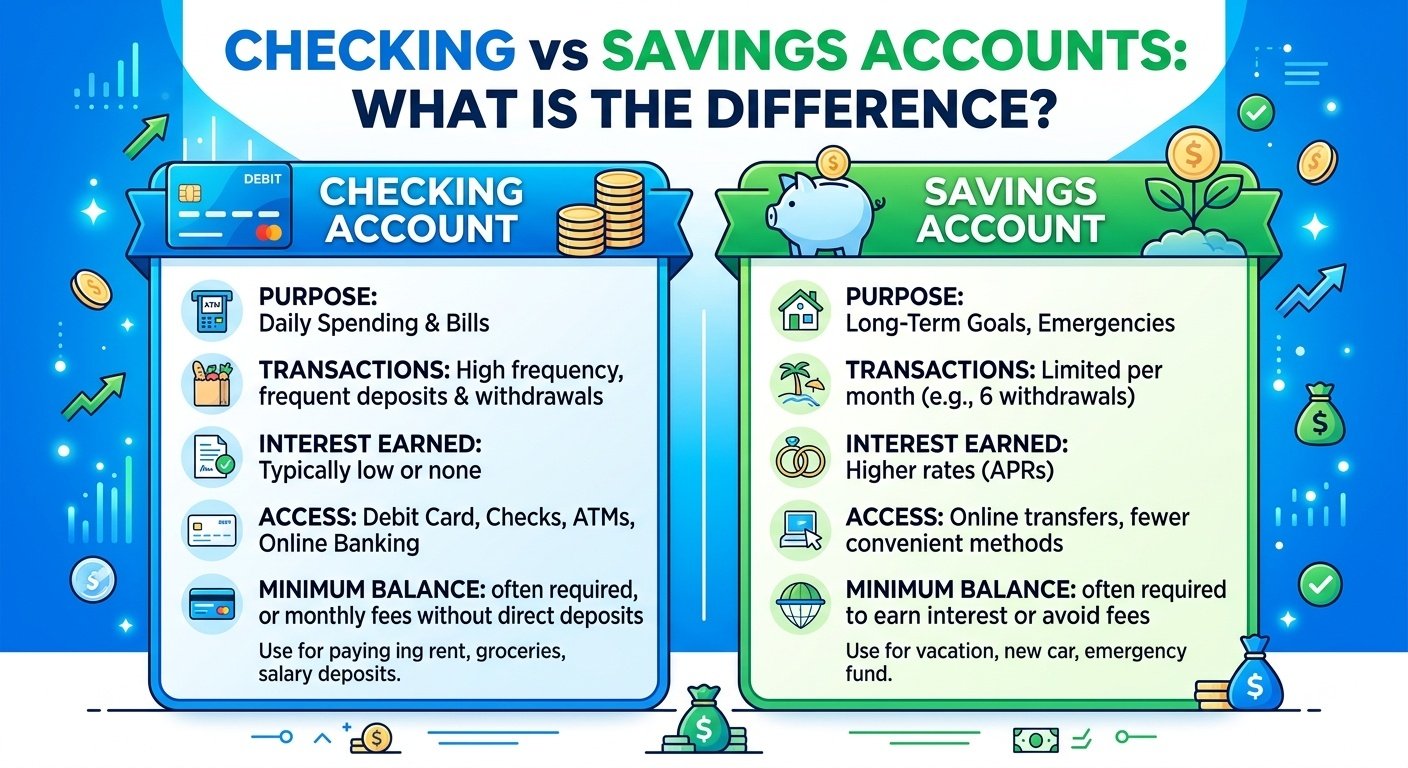
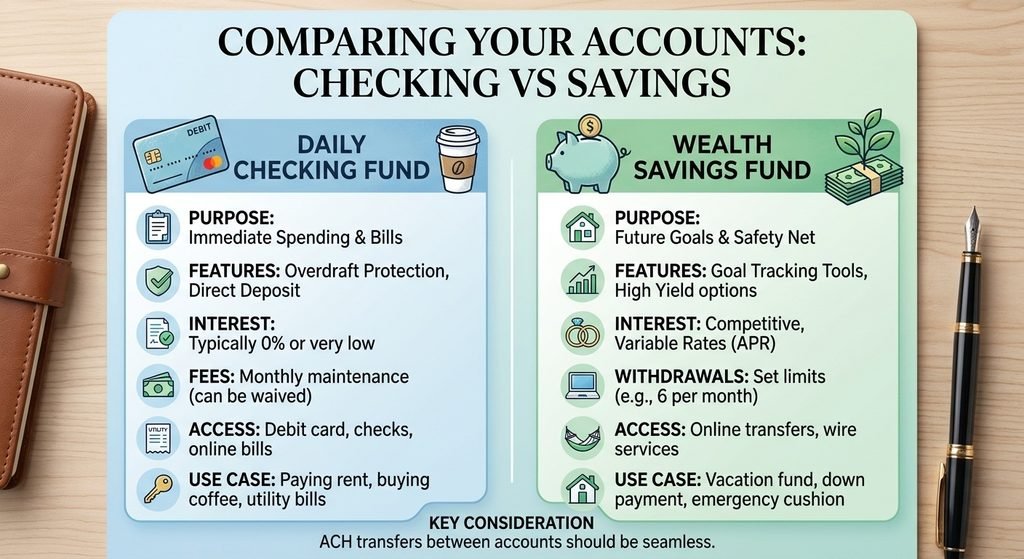
Checking vs Savings Account: Side-by-Side Comparison
| Feature | Checking Account | Savings Account |
|---|---|---|
| Primary purpose | Everyday spending | Storing money for future use |
| Interest earned | Little to none | Usually yes, varies by bank |
| Debit card access | Yes, typically included | Sometimes, but less common |
| Transaction frequency | Unlimited or high limit | May have monthly limits |
| Best for | Bills, purchases, daily expenses | Emergency funds, savings goals |
| Risk of overspending | Higher, due to easy access | Lower, due to separation from spending |
Why You Might Need Both Account Types
Most financial experts recommend having both a checking and a savings account, since each serves a distinct purpose.
- Checking account: Handles your regular income and expenses — rent, groceries, utility bills, and daily purchases.
- Savings account: Holds money you’re setting aside, such as an emergency fund or funds for a specific goal like a vacation or a down payment.
Keeping these funds separate makes it easier to track your spending, avoid accidentally dipping into your savings, and stay organized with your overall budget.
How Interest Works on These Accounts
Savings accounts generally earn interest because the bank uses a portion of your deposited funds for lending activities, and shares a portion of the resulting return with you. The interest rate on a savings account can vary significantly between banks and account types, so it’s worth comparing options.
Checking accounts, by contrast, are built primarily for transactions rather than growth, which is why they usually offer minimal or no interest.
Fees to Watch Out For
Both account types can come with fees, depending on the bank and account terms. Common fees include:
- Monthly maintenance fees: Some accounts charge a fee unless you maintain a minimum balance or meet other requirements.
- Overdraft fees: Charged when you spend more than your checking account balance, common with checking accounts.
- Excess withdrawal fees: Some savings accounts charge a fee if you exceed a set number of withdrawals per month.
- ATM fees: Using an ATM outside your bank’s network can trigger additional charges.
Reading the account terms carefully before opening either type of account can help you avoid unnecessary costs.
How to Choose the Right Account for Your Needs
Choosing between a checking and savings account isn’t usually an either/or decision — it’s about understanding what each account is for and using both appropriately.
- If you need to pay bills, make purchases, or access money frequently, a checking account is the right tool.
- If you want to set money aside for future use and potentially earn a bit of interest, a savings account is the better choice.
- If you’re building an emergency fund, a savings account (ideally one with a competitive interest rate) is typically recommended, since it keeps the money accessible but separate from everyday spending.
Common Mistakes to Avoid
- Keeping all your money in checking: This can lead to overspending and missed interest opportunities.
- Ignoring account fees: Fees can quietly reduce your balance over time if you’re not paying attention.
- Not comparing interest rates: Savings account interest rates vary widely between banks, so it pays to shop around.
- Overusing a savings account for transactions: Frequent withdrawals may trigger fees and defeat the purpose of separating your funds.
Key Takeaways
- Checking accounts are designed for everyday spending, while savings accounts are designed for setting money aside.
- Savings accounts typically earn interest; checking accounts usually do not.
- Using both accounts together can help you manage spending and build savings more effectively.
- Understanding account fees and interest rates helps you choose accounts that fit your financial habits.
Conclusion
Checking and savings accounts each play a distinct role in managing your finances. A checking account keeps your everyday spending organized and accessible, while a savings account helps you set money aside and grow it over time. Understanding how these accounts differ — and using them together strategically — is a simple but effective step toward better financial organization and long-term money management.