A credit score is one of those financial concepts everyone has heard of but many people don’t fully understand — including how it’s calculated, what actually moves it up or down, or why it matters beyond simply getting approved for a loan. This gap in understanding can be costly, since your credit score quietly influences interest rates, loan terms, and sometimes even non-lending decisions like rental applications. This guide breaks down what a credit score actually is, how it’s calculated, and what you can do to build and maintain a strong one.
What a Credit Score Actually Is
A credit score is a numerical representation of your creditworthiness — essentially, a summary of how reliably you’ve managed borrowed money in the past, used by lenders to estimate the risk of lending to you in the future. Scores are typically calculated by credit bureaus based on information in your credit report, which tracks your borrowing and repayment history across credit cards, loans, and other credit accounts.
Scores usually fall within a defined range (commonly 300 to 900 in many systems), with higher scores generally indicating lower perceived risk to lenders, and correspondingly better loan terms and approval odds.
Why Your Credit Score Matters Beyond Loan Approval
It Affects the Interest Rate You’re Offered
Even when you’re approved for a loan or credit card, your credit score often influences the specific interest rate offered. A lower score can mean a meaningfully higher interest rate, which translates into paying significantly more over the life of a loan compared to someone with a stronger score borrowing the same amount.
It Can Influence Non-Lending Decisions
In some cases, landlords, and occasionally employers (in specific industries and with appropriate consent, subject to local regulations), may consider credit history as part of their evaluation process, viewing it as one indicator of financial responsibility, though this varies considerably by context and jurisdiction.
It Affects Your Borrowing Capacity
A stronger credit score often means access to higher loan amounts and more favorable credit card limits, giving you more financial flexibility when you genuinely need it — whether for a major purchase, a business opportunity, or an emergency requiring quick access to credit.
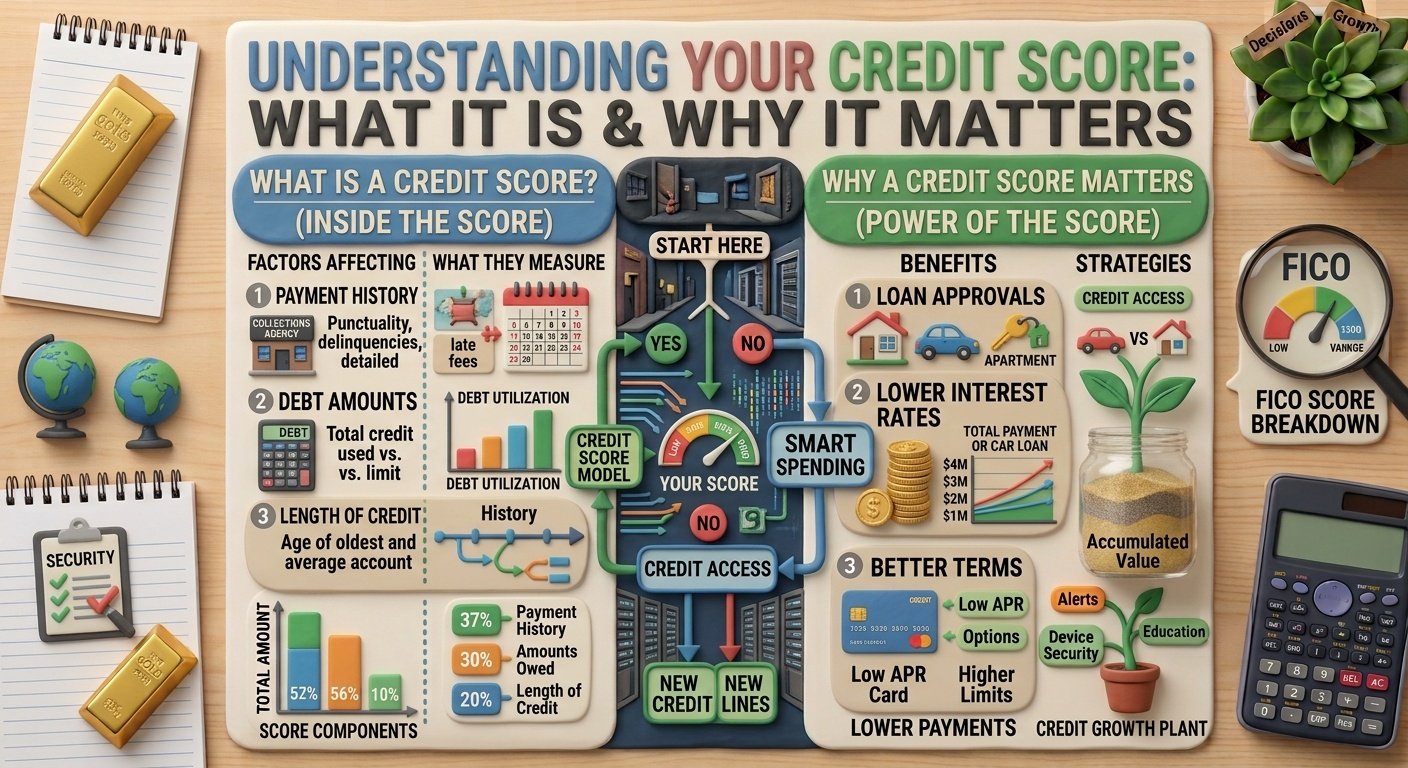
The Main Factors That Determine Your Credit Score
Payment History
This is typically the most heavily weighted factor in most credit scoring models. Consistently paying your credit card bills, loan EMIs, and other credit obligations on time builds a strong payment history, while missed or late payments can significantly and sometimes lastingly impact your score, particularly if the delay is substantial or happens repeatedly.
Credit Utilization
Credit utilization refers to how much of your available credit you’re actively using, particularly on revolving credit like credit cards. Using a very high percentage of your available credit limit consistently can signal higher risk to lenders, even if you’re making payments on time, while keeping utilization at a lower percentage of your total available credit is generally viewed favorably.
Length of Credit History
A longer credit history, particularly one showing consistent, responsible use over time, generally contributes positively to your score, since it gives lenders more data to assess your reliability. This is one reason financial educators often advise against closing your oldest credit accounts unnecessarily, since doing so can shorten your average credit history length.
Credit Mix
Having a mix of different types of credit (such as a combination of credit cards and installment loans, managed responsibly) can contribute positively to your score in many scoring models, though this factor typically carries less weight than payment history and credit utilization.
New Credit Inquiries
Each time you apply for new credit, lenders typically perform a “hard inquiry” on your credit report, which can cause a small, usually temporary dip in your score. Applying for multiple new credit accounts in a short period can have a more noticeable cumulative impact, since it may signal increased risk or financial strain to lenders reviewing your report.
How to Check Your Credit Score
Most countries have designated credit bureaus that maintain credit reports and calculate scores, and many offer free access to your report and score at least once a year, sometimes more frequently through specific programs or partnerships with financial institutions. Many banks and credit card providers also offer free credit score access directly through their apps or websites as a customer benefit.
Regularly checking your own credit score and report (which generally doesn’t negatively affect your score, since this is typically classified as a “soft inquiry” rather than a hard inquiry) helps you catch errors or signs of fraudulent activity early, and understand where you currently stand before applying for significant credit like a home loan.
Common Misconceptions About Credit Scores
“Checking My Own Score Will Hurt It”
This is a common but inaccurate belief — checking your own credit score or report is generally treated as a soft inquiry, which doesn’t affect your score, unlike a hard inquiry initiated by a lender when you formally apply for credit.
“I Need to Carry a Balance to Build Credit”
Some people believe carrying an unpaid balance on their credit card (rather than paying it in full each month) helps build credit — this isn’t accurate. You can build strong credit by using your credit card responsibly and paying the full balance on time each month, avoiding unnecessary interest charges while still demonstrating consistent, positive payment behavior.
“Closing Old Credit Cards Always Helps My Score”
Closing old, unused credit cards might seem like simplifying your finances, but it can actually reduce your score by shortening your average credit history length and reducing your total available credit (which can increase your utilization percentage on remaining accounts). This doesn’t mean you should never close a card, but it’s worth understanding this trade-off before doing so.
Practical Steps to Build or Improve Your Credit Score
Make all payments on time, every time, since payment history typically carries the most weight in scoring models — setting up automatic minimum payments as a safety net (while still aiming to pay in full) can help prevent accidental missed payments.
Keep your credit utilization reasonably low relative to your total available credit limit, ideally well below your maximum limit, rather than regularly maxing out your available credit even if you’re making payments on time.
Avoid applying for multiple new credit products in a short period unless genuinely necessary, since each application can cause a small dip and multiple applications in quick succession can compound this effect.
Regularly review your credit report for errors — incorrect information (a payment marked late that was actually on time, or an account that isn’t actually yours) can unfairly drag down your score, and most credit bureaus have a formal process for disputing and correcting inaccuracies.
Be patient — building strong credit is a gradual process that reflects consistent behavior over time, not something that improves dramatically overnight through a single action.
Understanding the Difference Between Credit Score and Credit Report
Your credit report is the detailed underlying document containing your credit account history, payment records, and other related information, while your credit score is a single numerical summary calculated from that report using a specific scoring model. Reviewing your full credit report periodically — not just your score — helps you understand the specific factors influencing your score and catch any inaccuracies within the underlying data itself.
Key Takeaways
- A credit score summarizes your creditworthiness and significantly influences loan approval, interest rates, and sometimes other financial and non-financial decisions.
- Payment history and credit utilization are typically the most heavily weighted factors in most credit scoring models.
- Checking your own credit score doesn’t hurt it — this is a common misconception, since self-checks are generally treated differently from lender-initiated hard inquiries.
- Building strong credit is a gradual, consistent process built through on-time payments and responsible credit utilization over time, not a quick fix.
- Regularly reviewing your credit report helps you catch errors that could be unfairly affecting your score.
Conclusion
Your credit score isn’t an arbitrary number — it’s a structured summary of your credit behavior that genuinely affects your financial opportunities, from loan interest rates to borrowing capacity. Understanding the core factors that shape it — payment history, credit utilization, credit history length, and responsible credit management — puts you in a strong position to build and maintain a healthy score over time, rather than treating it as a mysterious figure outside your control.